Archive for Travel

2001 Footy Grand Final in Sydney

I’ve been posting a few videos on YouTube from our time in Australia in 2001 and 2002, and I thought I would share a few of them here. This movie features the La Perouse Panthers in an exciting city championship game against Moore Park, one of their biggest rivals.

I still haven’t mastered getting the best quality video up on YouTube. I’ve tried several different methods to improve the resulting video after YouTube encodes my video after upload, but nothing has worked.

If anyone has a killer method of how to move a finished iMovie 2006 video to YouTube, please leave a comment. Thanks.

Comments (1)

My Very Own Chinese Stamp

Jeff and Katy recently returned from a trip to China, which must have been an amazing journey, if their photos and descriptions are any indication. Some of my favorite posts cover Xian and the Terracotta Army and Shanghai, but there are several others listed on Jeff’s website, Peebo.net.

While Jeff was in China, I took care of some very easy website updating for him, and to say thanks, he got me a Chinese stamp with my name on it. This is similar to a stamp I gave to Dave in 1995, and I’ve been wishing I had picked one up for myself ever since coming back from China that year.

truk’s Chinese Stamp

You can get these stamps made for you all over China, particularly anywhere there are tourists. They will carve whatever you want into stone (usually marble), though most people elect to simply get their name written in Chinese. I always wonder how many folks have a stamp that actually says something totally different than what they expect, simply because no one around them reads Chinese.

Comments

Walking East Across Memphis

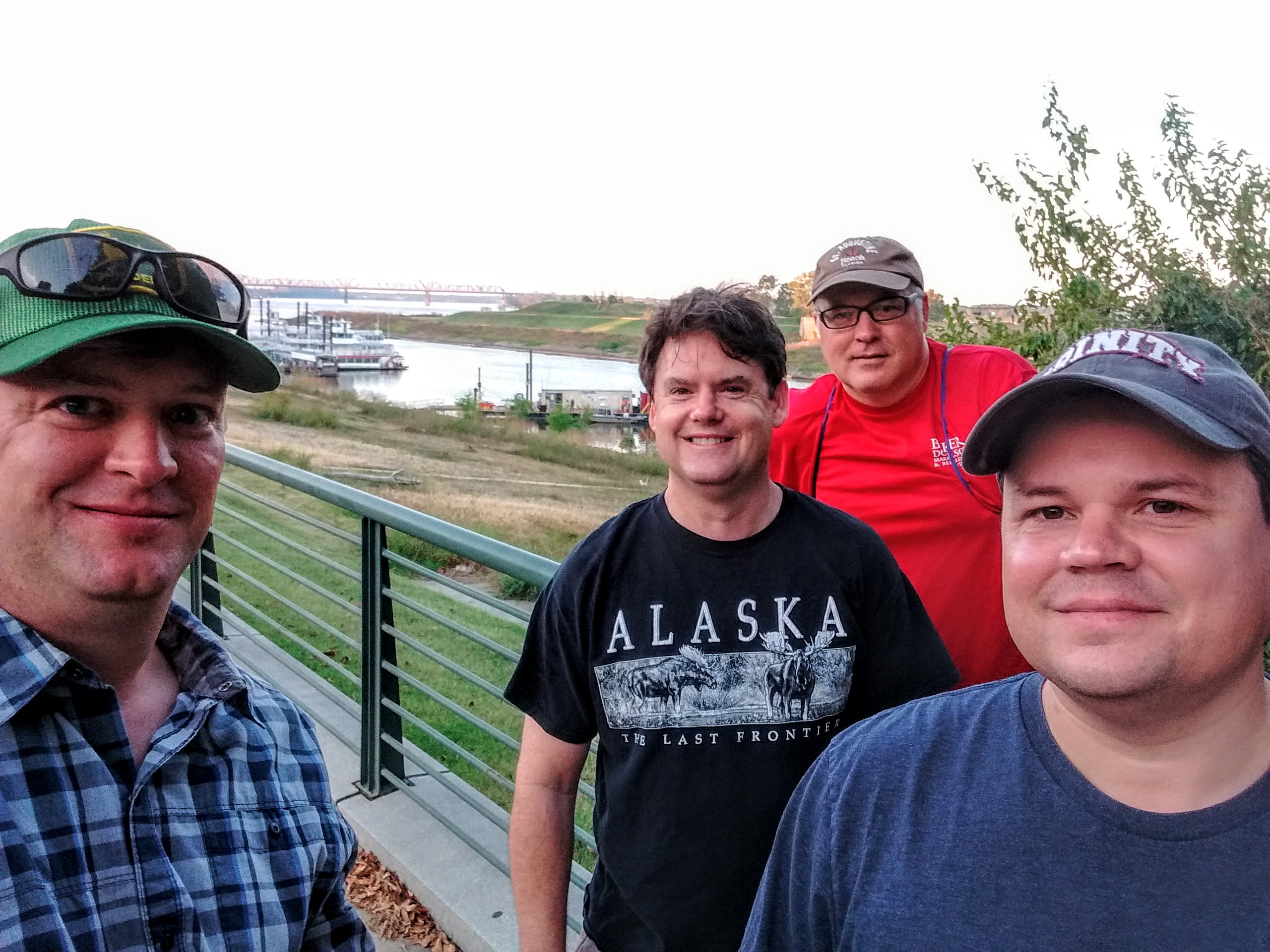
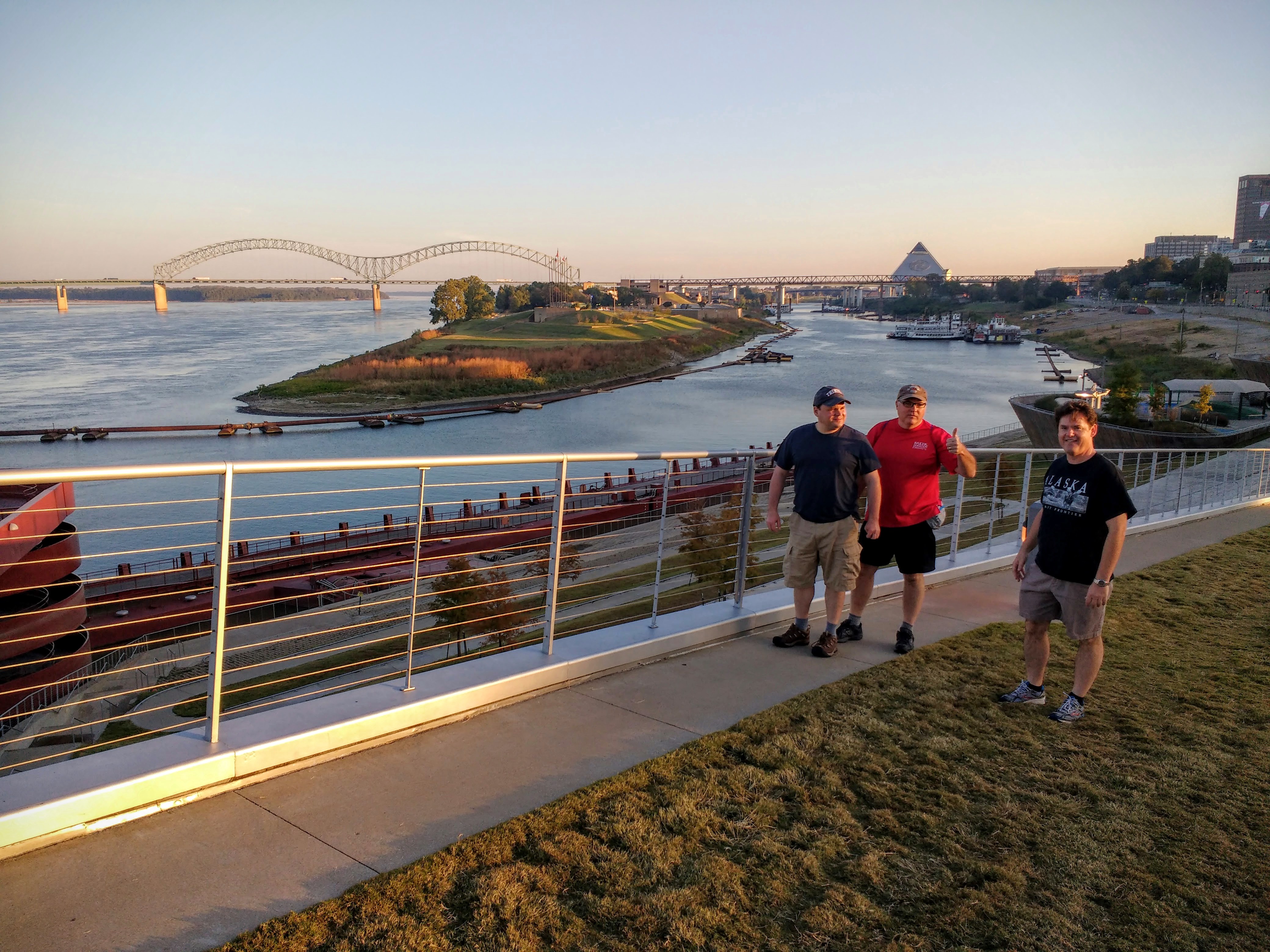
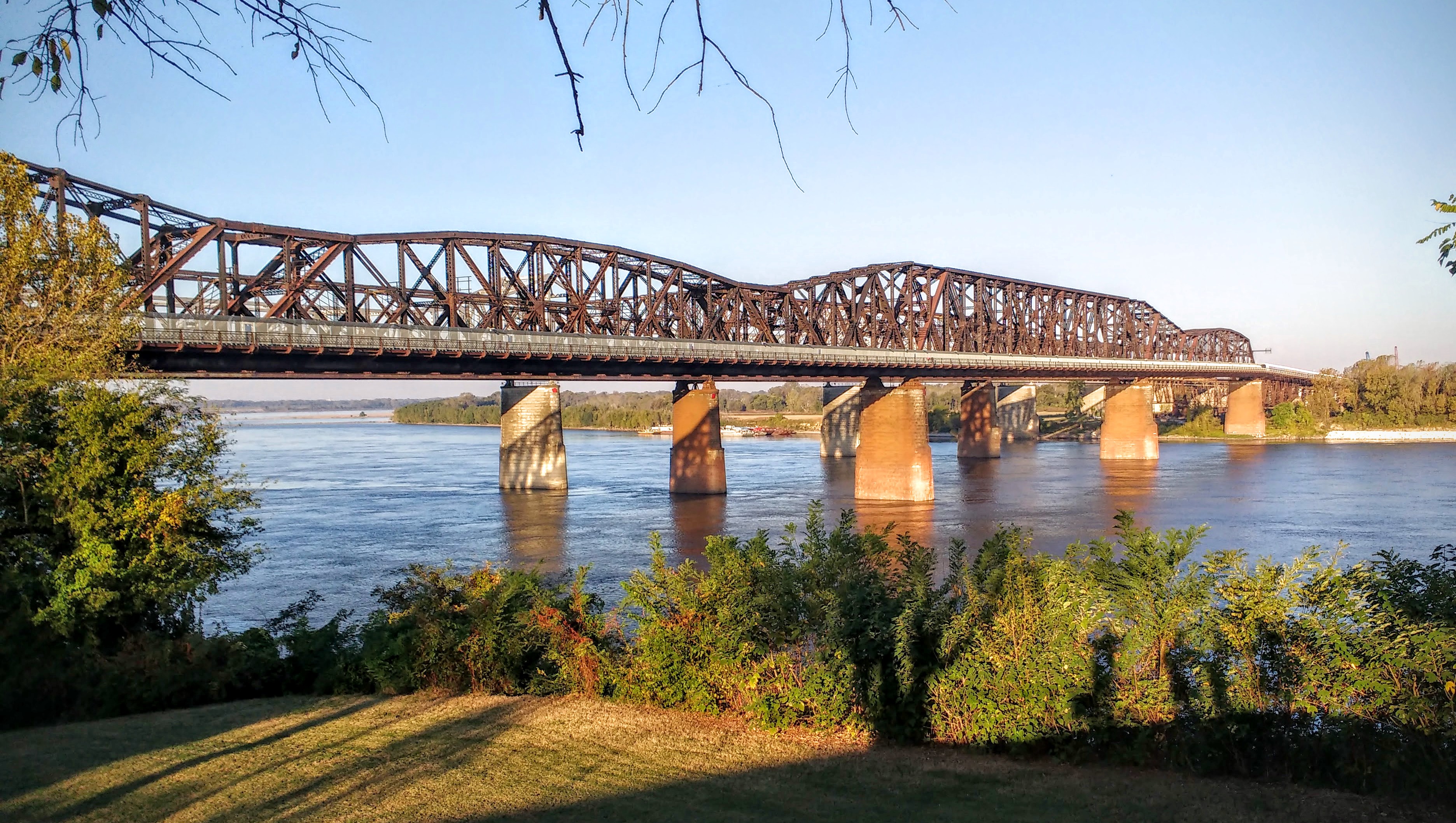
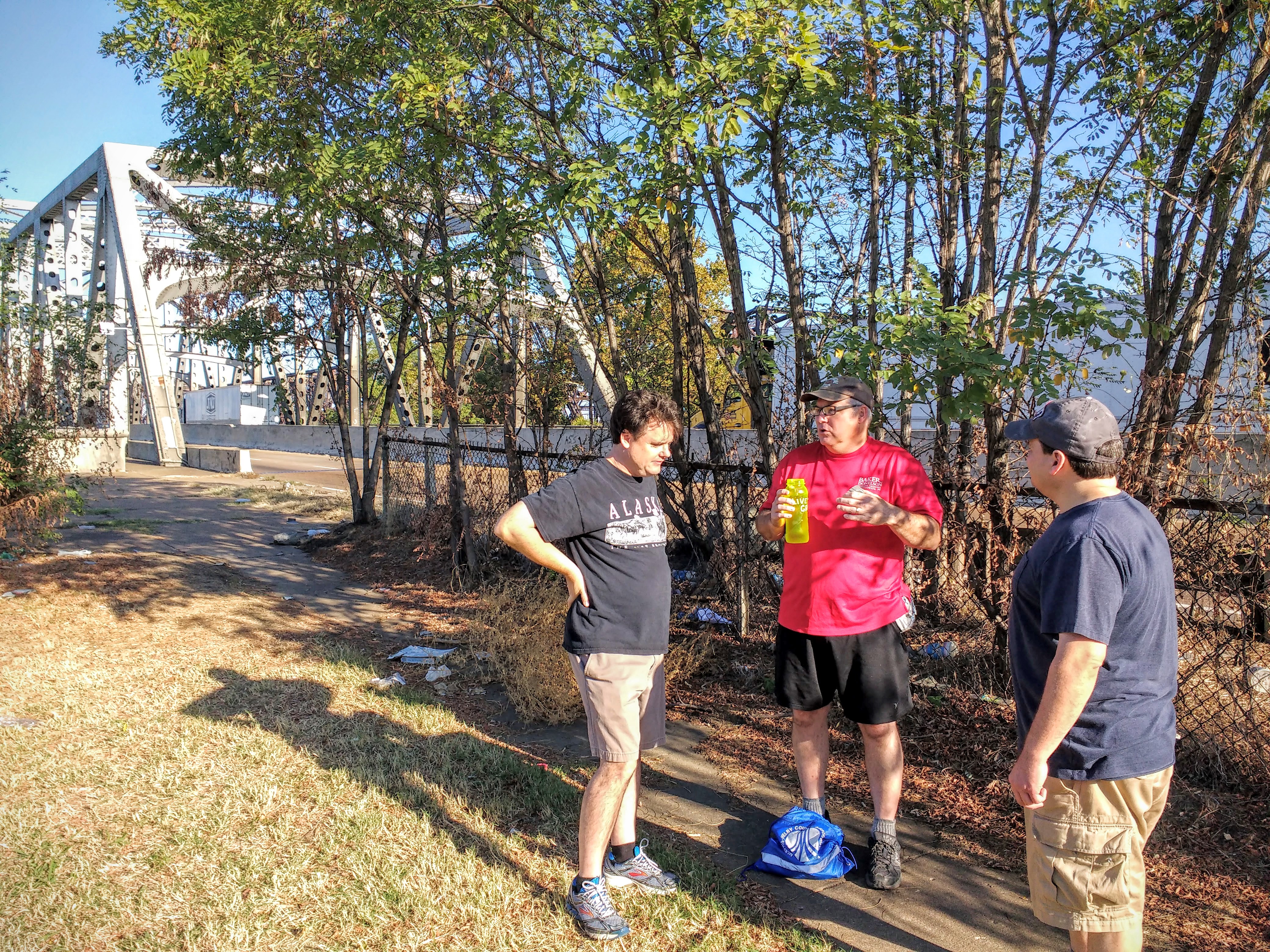
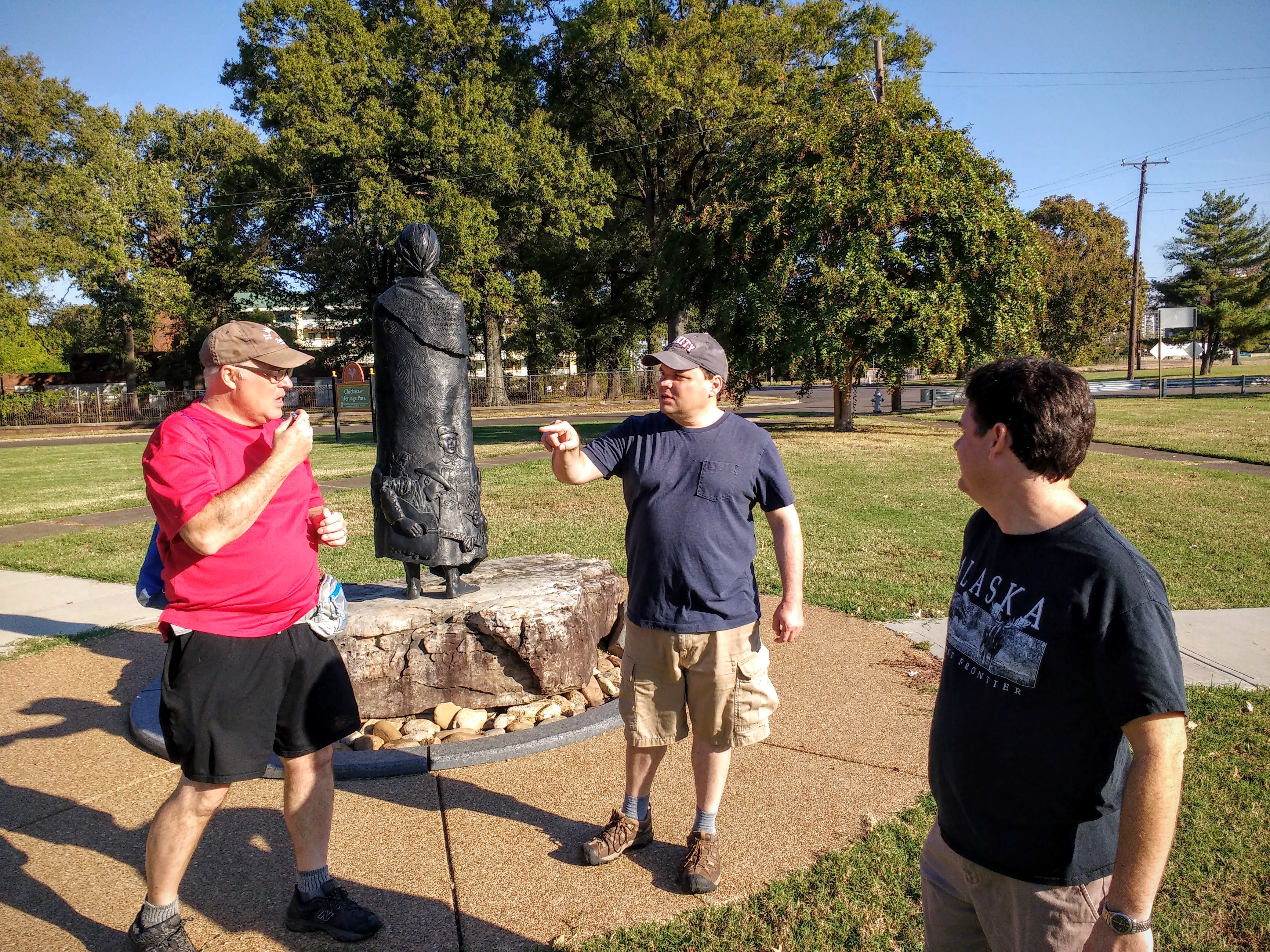
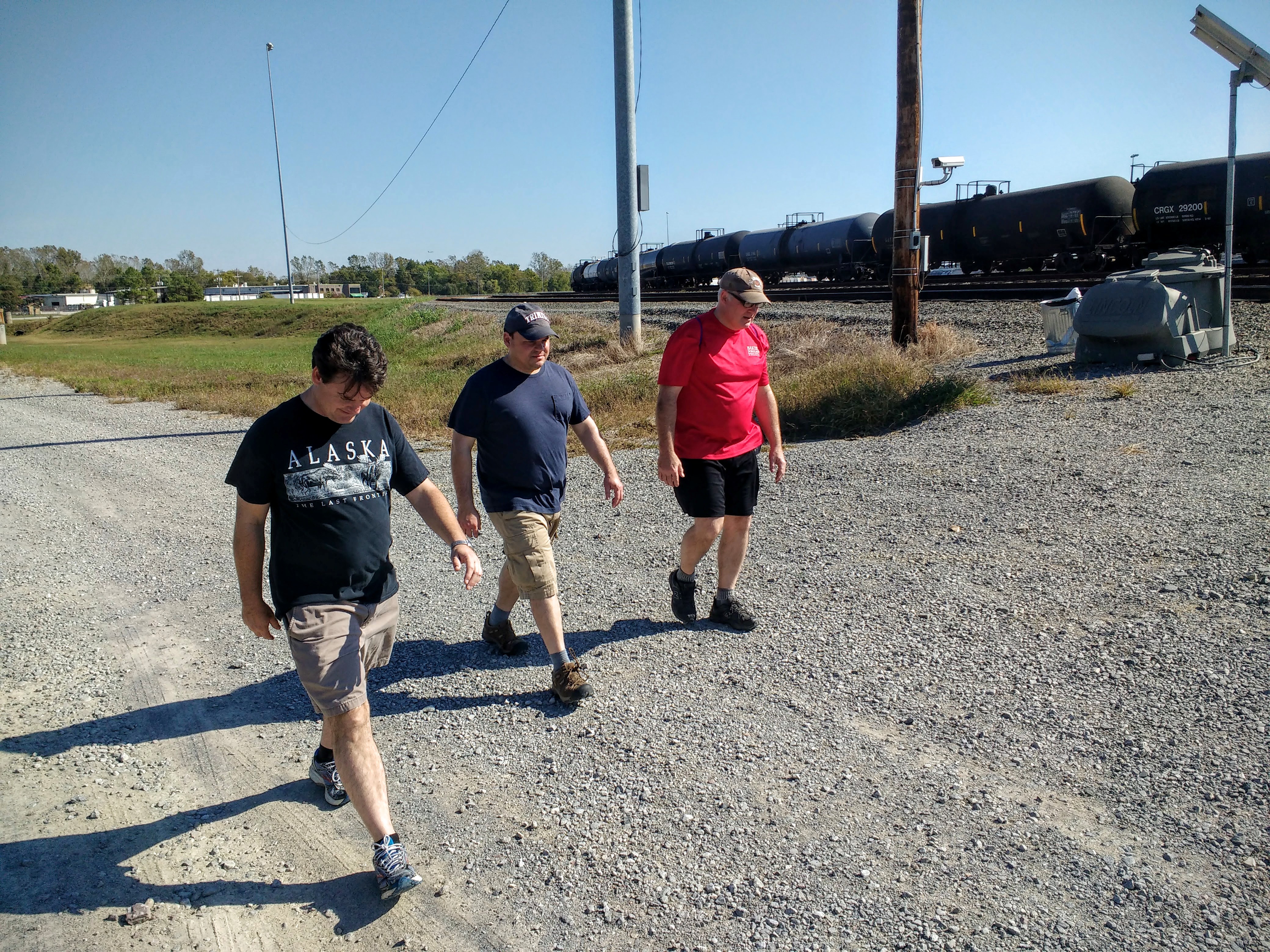
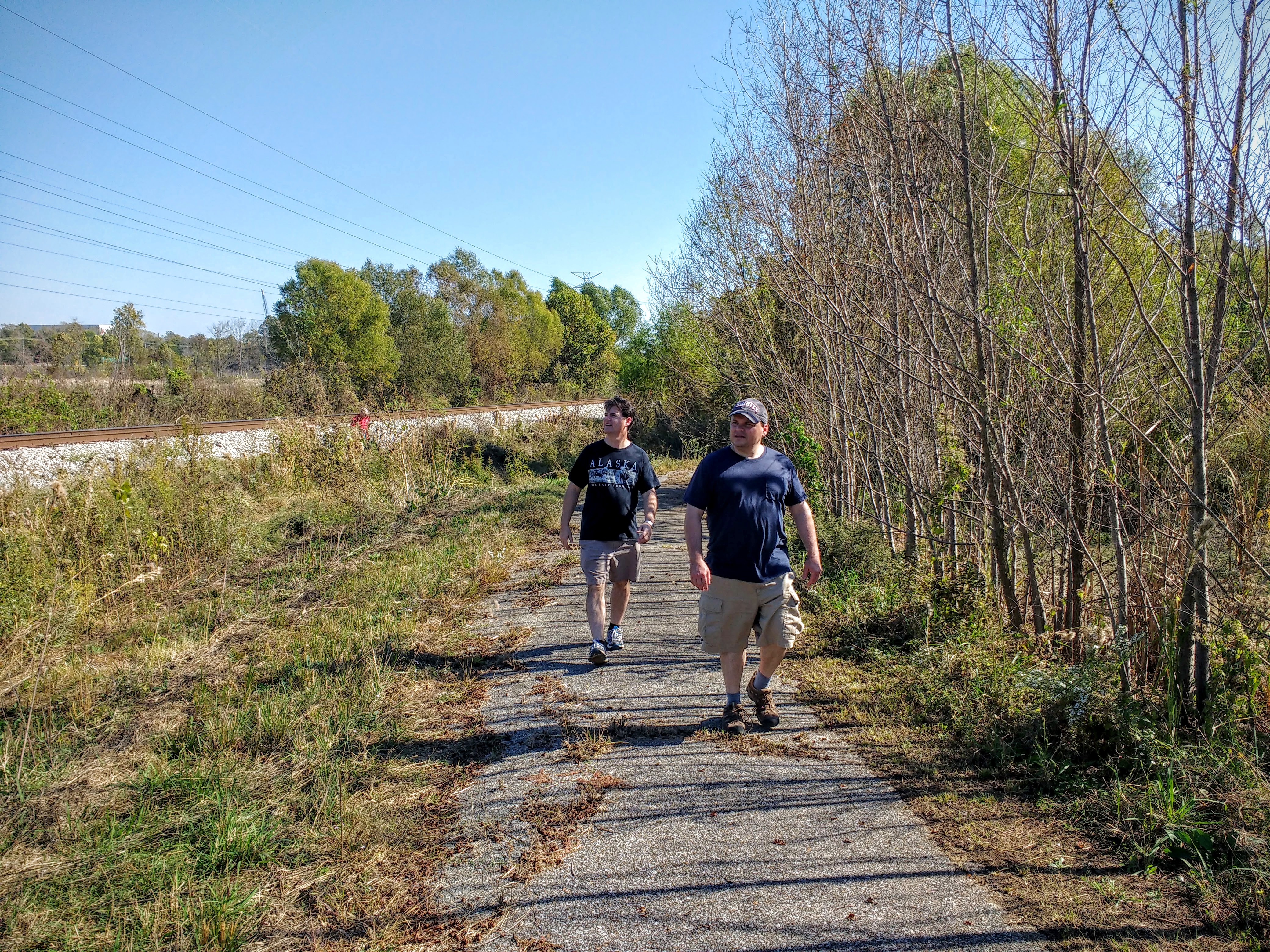
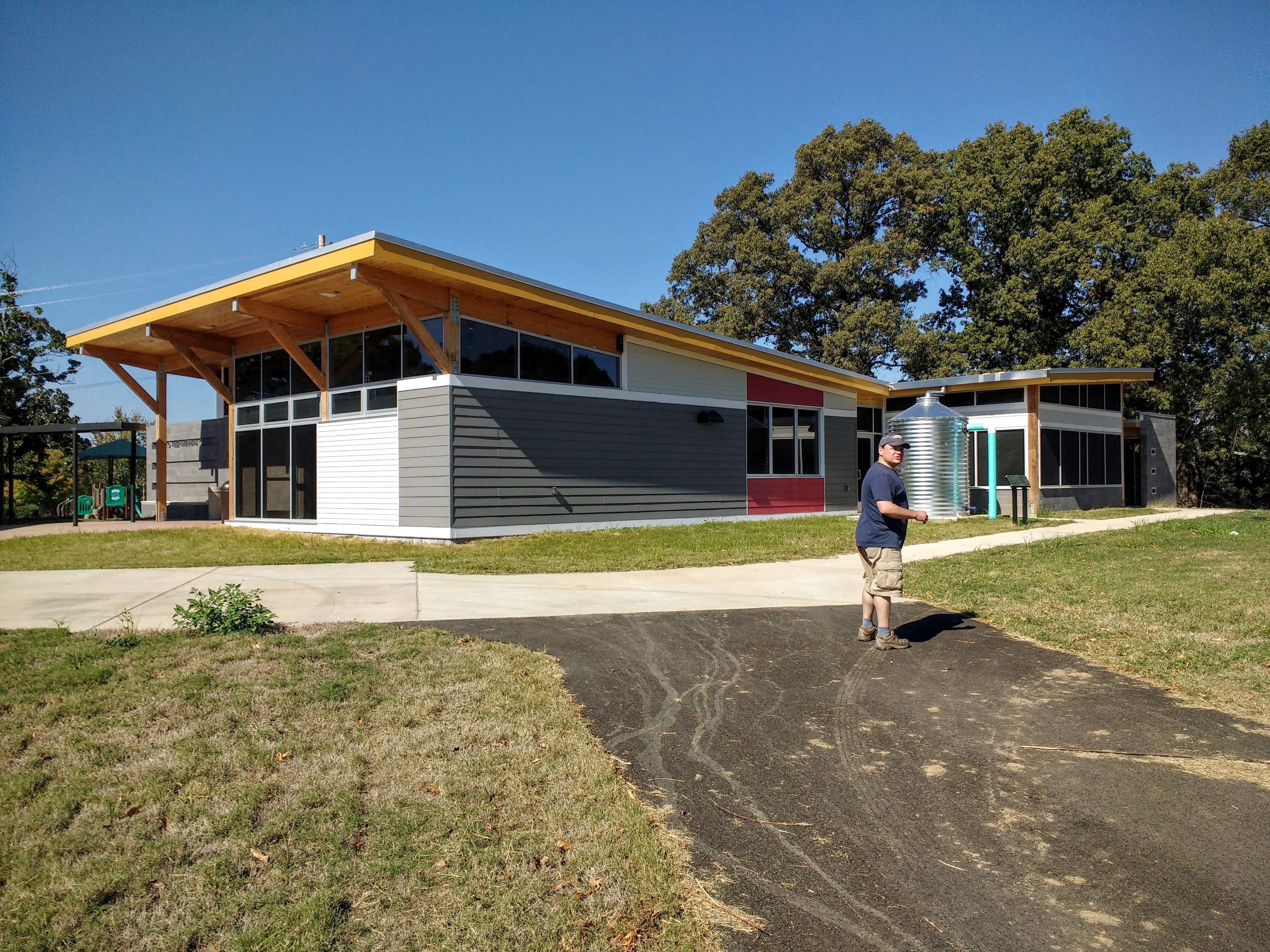
Last Saturday, I walked across Memphis with several friends, starting at the historic Mississippi River cobblestone landing at dawn and ending in Collierville, only a few miles from the Fayette County border. We covered just over 19 miles in less than 9 hours.

Tom, truk, Richie, and Robert Setting Out

Richie, Robert, and I made it all of the way to Houston Levee Road at Wolf River Boulevard by 3:45 PM before needing to be picked up to make another appointment. Tom started with us but had to leave earlier than that for a previous engagement.

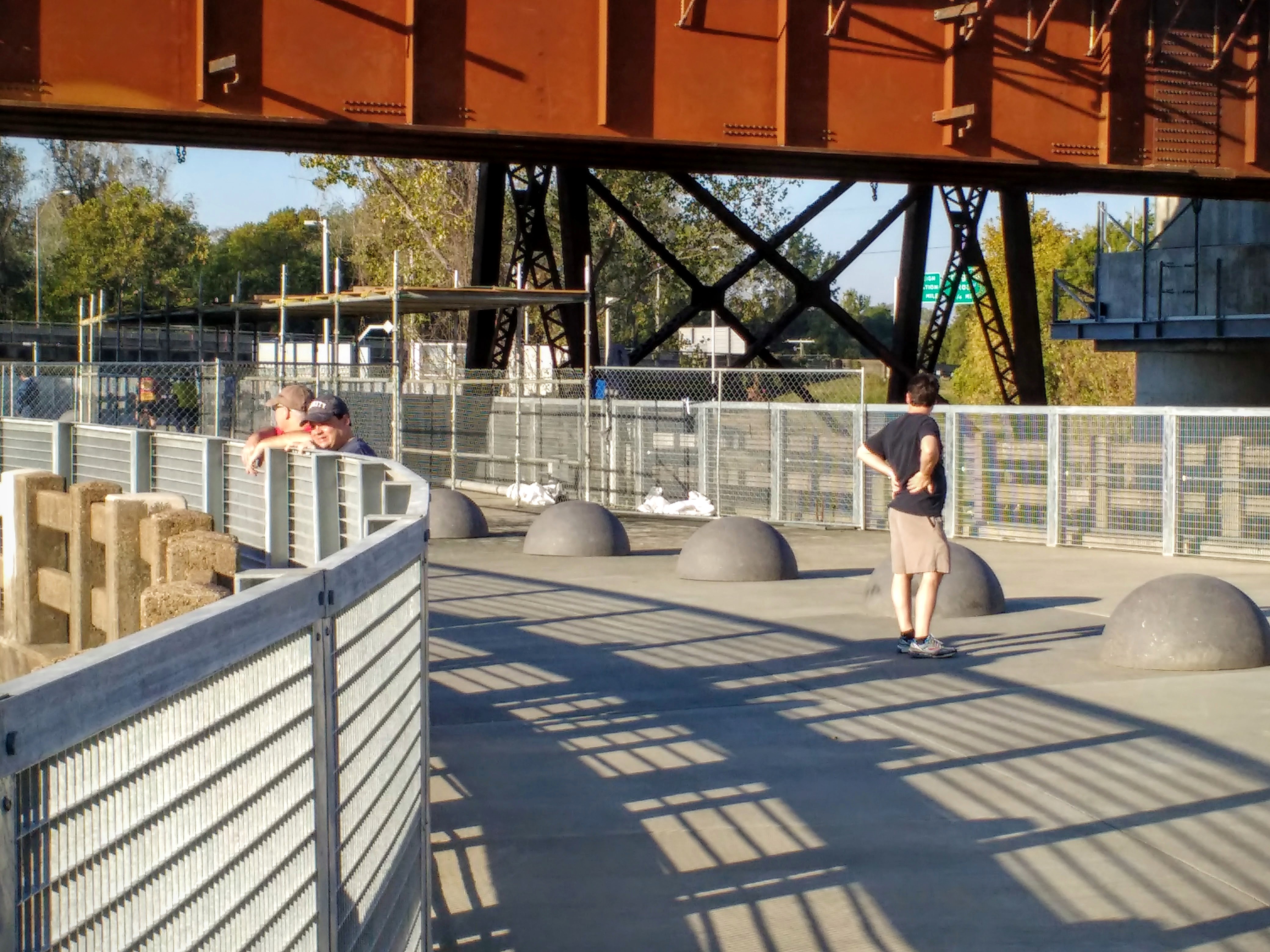
Union Extended Overpass, with Midtown Impound Lot

The purpose of the trip was to do a bit of urban exploring and see how far you could get by simply walking through the city in a single day. The original idea, which came from Frank (though he had a schedule conflict and couldn’t attend the walk), was to start at sunrise and stop walking at sunset. Simple enough, but Memphis offers several major routes running east-west, and part of the fun of the walk was figuring out, on the fly, how to see the most unusual sights in the most common locations while making the most progress eastward.

Robert and Richie Standing Above I-240

Downtown passed quickly. We started on Madison, switched to Union after visiting Quetzal for some coffee, and then rambled back to Madison before sliding over to Union again as we headed through Midtown. Poplar Avenue proved to be the best route through East Memphis, but in Germantown, we opted for a more directly easterly route, heading down Farmington Boulevard and Wolf River Boulevard before stopping after entering Collierville.

How Germantown Sidewalks End

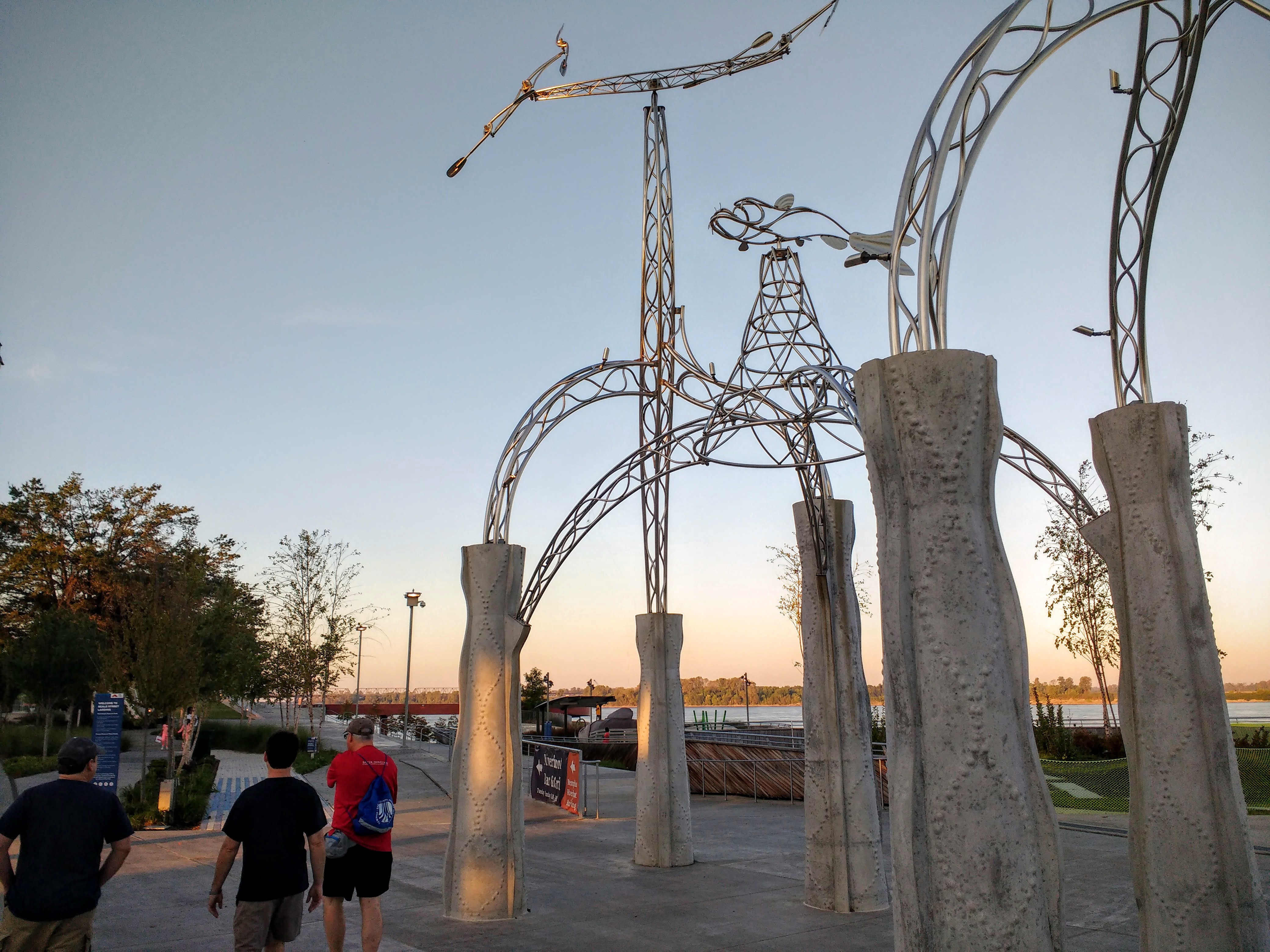
All along the way, we encountered interesting sights in places we had all driven through hundreds, if not thousands, of times before. Some highlights: the metallic art chair on Marshall, random apartment complex art in Midtown on Union, boats in the Midtown impound lot, giant drainage ditches in view of Clark Tower in East Memphis, railroad tracks over I-240, random sidewalk placement in Germantown, and a high school with an ornamental front entrance that isn’t accessible from the road.

truk and Richie in Collierville

All along the way, we were amazed by the amount of “car crumbs” (Richie’s description for the endless stream of broken bits of automobile plastic and metal that litters the sides of our roads and sidewalks) and lack of pedestrians (in spite of a perfect weather day for being outside - low humidity, with a high about 80). For example, we didn’t see any other pedestrians between Midtown to Farmington Boulevard, a distance of over 11 miles.

I would highly recommend this trip to anyone else that just wants to get out and see the city. Several folks mentioned that this might be a dangerous trip, but I found it to be trouble-free. Just get some comfortable shoes and a ride to drop you off downtown, and start walking east. You can buy everything you need along the way, and there are surprisingly few barriers or big intersections to trouble you.

Click here to view more photos from the walk

Comments (5)

Kauai, Hawaii - The North Side

Kilauea LighthouseIt was hard to leave Mindy’s and the wonderful southwest side of Kauai, but we had a reservation in Wainiha on the north side that we had to keep. Especially given the cost of where we were staying, which we had to pay in advance to even keep our reservation! Because Kauai does not have a road that goes all the way around (which actually is a good thing - it keeps development in the fragile northwest portion of the island to a minimum), we had to circle the island, passing through the traffic messes that are Lihu’e and Kapa’a.

We stopped in Kilauea to check out the lighthouse and accompanying Kilauea Point National Wildlife Refuge, which was an unexpected treat. This place is a haven for birds (and bird lovers), where you can see the Pacific golden plover, Laysan Albatross, and the Nene (the official Hawai’ian state bird), all in one place, with a wonderful old, white lighthouse set before the pounding Pacific. The US government built the lighthouse in 1912, and it remained in operation through 1974, when a more modern, automated lighting system took over.

kath at Ke’e Beach

When we arrived in Wainiha, we finally got an idea of just far we had come from the bustle of the east side of Kauai. Past Hanalei, the pace really slows down, with an increase in the number of one-lane bridges and a road than runs for long stretches in a winding trail just above the ocean. Our rental place looked out over Kepuhi Beach, which was good for more than just the view and the nice breezes. It turns out that we were backed into a kind of chasm which kept out almost all radio waves, including cell phones and wifi. Even the FM and AM didn’t work. To get email during the 5 days we were there, we headed across the road to the beach, where the iPhone could barely get a signal, probably from Princeville, across Hanalei Bay. We actually loved the remoteness, and the lack of instant Internet access helped us get away from it all, even more.

Hanalei Church

We spent most of our time on the north side relaxing on beaches and snorkeling or swimming in the waters just off of them. This area of Kauai is a beach-goer’s paradise. From Queen’s Bath to Hideaways to Wai’oli on Hanalei Bay to Kepuhi, Tunnels, Ha’ena, and Ke’e beaches toward the end of highway 560, you could spend a month lounging on north shore beaches and not be bored with scenery. I’ll talk more about the beaches in a future posting, but all of them, without exception, were incredible. It rained a bit during different times of the day, but the sun was always shining in a half-hour or so, and we never had to leave the beach due to the weather.

kath at Hanakapi’ai Beach

We took a great hike along the Kalalau Trail, which starts at the end of the road, at Ke’e Beach. While only 11 miles long, this is some of the most challenging, literally breathtaking, and visually stunning hiking in the world. While we only went a couple of miles in, to Hanakapi’ai Beach (the furthest you can go without a camping permit), the hike really stoked our sense of adventure. We really felt like we were seeing one of the wild places of the world, much like our hike in December 2005 through Abel Tasman in New Zealand. The ocean crashes into the beach with tremendous force, as the coastline come right out of the water and the beach is only there because of a river that runs through the chasm. We found a sea cave just to the west of the beach, filled with nesting sea birds. While we were exhausted when we got back, the hike left me wanting to see more of the coastline.

Na Pali coast with a rainbow

Wai’ale’ale Crater waterfallsTo this end, we took a helicopter tour of the entire island just before catching our series of flights home. This allowed us to float above the Na Pali rugged coastline and see many places that it is impossible to get to by hiking or taking a boat.

While it cost a lot, the helicopter trip was definitely worth it. Circling the Wai’ale’ale Crater, surrounded by a dozen waterfalls streaming down a thousand feet, well, that was simply incredible. It’s another place that is impossible to describe with words or pictures.

Traditionally, the area was kapu (taboo) and people were forbidden to enter. Even floating around inside the crater in a helicopter with the doors off, I could get a sense of the magic, and I was filled with wonder.

Manawaiopuna Falls

Waimea Canyon from the helicopter

kath in the helicopter

truk and kath in the helicopter

More photos of the Hawaii trip can be seen here

Comments (1)

Kauai, Hawaii - The West Side

Kath and I are back in Memphis now, after what seems like one of the best trips we’ve ever taken. Coming back to Memphis was actually a little depressing. I love Memphis, don’t get me wrong, but when you’ve been used to staring at incredible beauty day after day, for more than two weeks, the endless strip malls and crumbling streets can really weigh you down.

It is probably best to break up a description of Kauai into one part covering the west and south sides of the island and another part featuring the northern coastline, as we stayed in both areas. This part will focus on the Waimea area in the southwest region of Kauai, were we were based for 4 days.

We stayed at a guesthouse loft in Kekaha called Mindy’s, which turned out to the best value place for the entire trip. Mindy and Dave were great hosts, and they really went out of their way to make us feel welcome. We could walk a few to the Kekaha Beach Park and watch the paddle surfers or take a refreshing swim anytime we felt the urge.

kath and truk at sunset in Kekaha

However, there was a lot to see all over Kauai, especially on the western side, so we spent a lot of time roaming around and taking it in. We drove (in our rental car - a yellow, PT Cruiser - ugh, terrible choice made by Dollar) to the end of Highway 50 on the west side, behind the back of the Pacific Missile Range Facility and close enough to Polihale State Park to know where the best sunsets could be seen.

Waimea Canyon

The next day, we checked out the Waimea Canyon and Koke’e State Park areas. The views on all of the roads around the canyon, particular the Waimea Canyon Drive are just stunning. Save an entire day for this activity, if you want to get out and do some short hikes, stop at most of the scenic overlooks, and drive down one of the ridge roads. While the views are breathtaking, perhaps the magical part involved the ever-changing weather and flora that you encounter just off the main roads.

kath at Koke’e walking through clouds

We walked about a mile past the Pu’u o Kila lookout and watched the clouds blow over the ridge, stream through us, and back down the other side, down into the Kalalau Valley, a place we would see from the air a week later.

Kalalau Valley, Kauai

While most folks hit a few of the overlooks and head back for the beach, we lingered along the Makaha Ridge Road, stopping just before the Makaha Ridge Tracking Station to snap some pics. This area is completely remote and empty, except for swooping birds and the crushing sounds of the ocean 1000 feet below. I only wish we had thought to bring a picnic…

Mekaha Ridge, overlooking the Pacific

We spent another relaxing day in Po’ipu, which is largely a resort and residential area. Normally, this would not have been my first choice, but as we came to discover on Hawaii, while no one owns the beach, most of the best beaches are surrounded by development, and there is no way to totally avoid it, if you want a sandy beach experience reachable without a long hike. The Po’ipu Beach Park and Brennecke Beach consistently win awards as some of the best beaches in the world, and it wasn’t hard to see why. There is some decent snorkeling from the beach at Po’ipu, and I made it over to a sandy island and almost stepped on a monk seal. Apparently, I’m not the first person to encounter the wildlife here… In the breakers, just beyond the protective sea wall, you can view sea turtles coming up for air as they ride the waves only feet away from bodyboarders. While the Grand Hyatt Kauai and many vacation homes keep this area full of vacationers year-round, we never felt crammed in by people. There is plenty of space and lots to do all around Po’ipu.

Brennecke Beach, Kauai

Wailua FallsOn our way around to the north side of the island, we stopped at Wailua Falls. This sight, while beautiful, wasn’t really worth the drive out of Lihu’e. In a way, it broke the spell that Kauai put on us (and which we badly needed). There is just so much to do on the island that you feel a little overwhelmed. There is beauty everywhere you look. I mean, munching on a $1.50 hot dog in the Costco parking lot, you are staring up at the amazing Ha’upu Range. You can’t get away from it. Wailua Falls brought us back down to earth, and we were finally able to enjoy the majesty of the island without the pressure to see every sight and enjoy every activity, because we knew that not everything would live up to our expectations. But almost everything else on the island did…

Click here for more photos of the Hawaii trip

Comments (1)

Kauai = Paradise?

We haven’t been able to post anything for the past few days, as we are on the very edge of cell signal (and civilization) at our current place, but that has afforded us more time to enjoy the paradise that is Kauai.

We have been hanging out at a different beautiful beach every day, catching rays and snorkeling, gazing at fascinating fish and turtles, and avoiding traffic jams and other people as much as possible. We even hiked a part of the incredible Na Pali coast to a wild beach and discovered a hidden cave along the coast.

It is hard to believe we have to leave tomorrow. Usually, I’m quite ready by this point to return to civilization. But, here, in this still wild end of Hawaii, I don’t believe I’ve seen a tenth of its magic. I now know why people come back year after year…

Posted by iPhone from Kepuhi Beach

Comments

Kayaking on the Big Island of Hawaii - Sunburned and Fancy Free

“Are you Japanese, sir?”

These are some of the first words I heard, as we prepared to cross Kealakekua Bay in our rented ocean kayak, hoping to approach the dying place of (Captain) James Cook and, perhaps, the finest snorkeling on Hawaii.

Bay

Where to start? Kath is a a cultural anthropologist, studying urban Aborigines in Australia, and her particular emphasis is on the Kooris in La Perouse, in the northern mouth of Botany Bay, Sydney. This is the same place that Cook first landed in Australia. In fact, if you look across the bay from where she spend endless afternoons, gathering stories from the locals and trying to gain the understandings of the folks clustered around Yarra Bay House, you will see the place where Captain Cook first landed on Terra Australis, though he didn’t really realize what it was. There are stories within the local Aboriginal inhabitants, some of which cover Cook’s initial landing and the reception that resulted, including Aborigines lobbing stones at the English, trying fruitlessly to drive them back into the sea. During the year that we spend in Australia among various Aboriginal groups, I heard over and over again that La Perouse is where “the bastards let Cook ashore.” As if Cook was the worst of their problems, then and now.

But what were we gubbas to think upon getting so close to the exact placement of Cook’s death?

After leading 3 largely successful expeditions of the Pacific for the the Crown, Cook was killed, quite ungracefully, on the volcanic beach at Kealakekua Bay on the Big Island of Hawaii, across from the current harbor, where his body was, well, cut up and preserved by the victorious Hawaiians, in the method that they would afford a great leader, before portions of it were returned to the HMS Resolution for a proper burial at sea, only after a demand by the crew. (There is too much to this fascinating story to relate here; for details, check out Wikipedia’s take on this event.)

Kath by the kayakFor our part, we rented an ocean kayak and some snorkeling equipment the night before from Pineapple Park (our kindly hotel up the road from the Bay), and we arrived early, hoping to spend some time with the spinner dolphins of the Bay. We watched them for about an hour and then started progressing toward the monument site. Half-way across, we seemed to cross through the dolphin nursery, where the baby spinners were being guarded by one adult while the remainders fed, under the annoying, watchful eye of swimming tourists making marine mammal songs on their own (seriously). It was very cool, the little baby dolphins following us, curious, but too afraid to breach or even show much more than a fin.

But, before we could even get the kayak into the water, we had to navigate the locals, which are way more active on a beach than I would be at 7 in the morning. One woman stopped to help us get the kayak into the water, and then helped us get our seats connected right, after my intuitive just-go-by-feel was obviously a failure. I had the seats upside down, which is apparently a common thing that Japanese do all over Hawaii (getting things situated upside down, apparently), thereby earning me the infamous question. But, despite the embarrassment, we got underway and got what we were promised: some of the best snorkeling I could imagine, especially right off a tall landmass and island.

Turtle

Kath and I stayed, tucked away on a little volcanic spit, until the mid-afternoon. By this time, I was fully ripened by my repeated trips into the water with snorkel and fins attached, and my back was stinging through the dried salt around my sunburn. We powered our way back to the dock and out of the water. The lady that wondered if I was Japanese was still there, directing traffic and wandering around to help newcomers. She really did personify Aloha.

The next day (July 10th), we spent wandering around the northeast portion of Hawaii, including some stunning beaches (such as Beach 69), before heading over the Saddle Road back to Hilo, where a plane was due to take us to Kuaui. We ended the day walking through Coconut Island with Kath, reflecting on our time in Hilo and wondering why it had to end.

From our first impressions of Kauai, it is a complete paradise. The sunsets are stunning, the pole surfers are mesmerizing , and red clay captivating. More later, as we figure more out about this place.

Kauai west coast

See more photos of the Hawaii trip here

Comments

Liquid Rock - The Volcano National Park - Hawaii

We spent most of the past few days exploring the Hawai’i Volcanos National Park. This (very) gradually expanding park features a lot to see and do, if by see, you mean look at expanses of black hardened lava, dormant calderas, and a few steam vents, and if by do, you mean hike around and baiting dehydration. We did a little of both, and it was really worth it.

truk in a lava field in Puna, Hawaii

We happened to come at a time when no lava is actively flowing down into the sea. On June 17th, after several years of pretty steady activity, part of the active Pu’u ‘O’o eruption area collapsed into itself, effectively sealing the lava flow off and causing the lava to only build up in one inaccessible area rather than sliding down the hillside to a place where we could get to it. Eventually, the lava will build up and overflow, probably creating a new path down to the ocean, but for now, there was nothing really to see other than the historical wrath of Pele. Thankfully, there was a lot of that to take in.

For the driving public, the park basically consists of 2 roads, one that leads around the crater and another that leads down from the crater to the sea. We took both, making sure to stop and take in the stark beauty as often as possible. While it would have been great to have gotten close to some active lava flows - particularly to cook some lava chicken - we actually got a chance to spend more time just taking in the landscape, which is amazing in its own right.

Before making it into the park, we explored the east side of the Big Island, in an area called Puna. This is a place of small, winding, one-lane roads that lead through stretches of lava fields and mangrove swamps, by seemingly suicidal surfers and ancient trees cooked by lava flows, whose crust now stands nearly immortal.

Surfers at Puna

When we picked up the rental car, the Hawaiian lady behind the counter asked me where we were going, and when I mentioned that Puna was one of our destinations, she said, “Why? There’s nothing there. I live there; I should know.” A clever trick to keep a haole from discovering a slice of paradise or ignorance about one’s home? Who knows; all I can say is that, if you get the chance to go, definitely do it. There is something about walking across an expanse of 40-year old lava to the edge of the pounding ocean, far away from park rangers, common sense, and, well, probably legality.

kath and truk at the Kileua Caldera

Inside the park, we walked to the end of the road, literally, where a 2003 lava flow covered up the highway through the park. It is a strange thing to see asphalt covered by a more organic but harder surface. The National Park Service really tries to strike a balance between allowing people to really get up close to really pretty dangerous areas without letting them go all out and hurt themselves. By looking at the flow’s expanse over the highway, a thing we can all visualize and understand, you can really get a sense of just how much liquid rock moved through that area. It is unlikely that highway will ever be cleared and rebuilt to connect with Puna.

Kath at the end of the road

Today, walked through a 500 year-old lava tube, traipsed through a micro-rainforest on the side of the Mauna Loa (the largest volcano on Earth), watched a tiny lizard eat jelly out of a disposable packet, peered across the bay where Captain Cook was killed, drank way too much Kona coffee, and walked around a Hawaiian traditional kapu site, watching gigantic turtles looking back at us in crystal clear tidal pools. The day ended eating fresh wild-caught tuna steaks that I cooked behind our hostel, along with an organic salad and fresh edamame, while watching the sun gradually sink into the Pacific.

More photos of the Hawaii trip are here

Comments (1)

Island Hopping

Haliewa churchThe morning of July 5th was spent rushing around, complete with an expedition and exploration of downtown Wahiawa, in the center of Oahu. The afternoon, while less exciting, revealed some of the more subtle charms of the North Shore, making me wish we had more than a couple of days to experience it.

We visited the historic town of Haliewa, which serves as the traditional gateway to the North Shore from the business side of the island, Honolulu, Waikiki, and Pearl Harbor. Haliewa is just the kind of place that you want to help get you in the mood to be away from the the hustle and bustle of 8-lane highways. One of our first stops was at Matsumoto’s store, which serves perhaps the best Hawaiian shaved ice in all of the islands. There is a permanent line there, stringing along the road, just hoping to get in for a $2 treat, and it was well worth the wait.

We checked out the beaches on the west side of the North Shore, but they were a little rough for our tastes, so we headed back to Backpackers Hawaii spend the rest of the afternoon at nearby (and utterly perfect) Waimea Bay. Our hostel, Backpacker’s Hawaii, was directly across from the Three Tables beach (excellent for snorkeling or diving; just throw on your gear and jump in) and near Shark’s Cove and Banzai Pipeline. Waimea Bay was only a 200-yard walk downhill. I can really see how the locals can get used to this. Quickly.

Kath at Wiamea Bay

On July 6th, we headed back to the airport for the hop to Hilo, on the Big Island, officially known as Hawaii. Hilo is in the northeast and, therefore, windward side of Hawaii, and the amount of rain delivered by the moisture-laden trade winds keeps the entire area soaked most of the year. Luscious green plants are everywhere, clinging to every waterfall and providing sensory overload, even for the most amateur botanist.

truk struggles with KoreanHilo’s Lyman House Memorial Museum was recommended to us as a way to get some context for what we would see on the Big Island. While most of the museum was obviously geared for kids, they did have a fascinating exhibit on clothing of the 1930’s and 40’s from Japan, Britain, and the US that featured patriotic war motifs. Freaky little kidwear featuring tanks and airplanes dropping bombs, things like that. There was also an exhibit about traditional Korean life, but I spent most of my time there spell-checking the older Korean texts.

As we plan to check out Puna and the volcano area tomorrow, we spent the remainder of the day checking out Rainbow Falls and then making our way along the Hamakua Coast, which stretches out 40 miles or so the north and west of Hilo. After meandering around deep gullies and through natural botanical gardens, we ended up at the end of the road, the incredible Waipi’o Valley Lookout. (Only 4-wheel drive vehicles can continue on from there, and something told me the rental Chevy Malibu was just not going to cut it.) The only thing that could complete with that view might be the small Hawaiian woman who had to be in her 80’s that we overheard say that she still walked down to the Waipi’o Beach from the lookout (15 minutes) and back (45 minutes) every day.

Waipio Lookout

In Hilo, we discovered a new type of cuisine, and we aren’t even sure what to call it. It is definitely Polynesian-inspired, but there is a multi-ethnic twist to it, with a lot of Japanese, Korean, and Filipino influences. We tried the Loco Moco, which is white, sticky rice in a bowl, covered with brown gravy and topped with meat (fish or sausage or something else) and a couple of eggs, cooked whatever way you want. (Some photos and reviews of the food are here.) Yummy. Very tasty. Tonight, we checked out Kuhio Grill, where I had something called “siamin,” which is an Hawaiian noodle soup, usually served with cabbage, spam, thinly sliced eggs, and all in an egg broth. The flavors really echoed the waves of immigration that have flowed to these islands over the past 500 years. Rarely can a multicultural society be summed up in a single dish, but there you have it. If you get a chance, try the saimin.

Click here for more photos of the Hawaii trip

Comments

A World Away

Beaches on the east coast of OahuKath and I made it to Honolulu yesterday evening, after traveling all day from Memphis. All is well, and we are currently ensconced on the North Shore, waiting for the big waves that will never come, at least not this month. (Because this is summer… Idiot… Idiot…) All of the big waves come in the winter on the North Shore, but that didn’t stop us from enjoying it. In fact, due to the largely empty, placid beaches, we probably enjoyed it more.

No, actually, I knew that the waves would be calm on the North Shore before we booked. I just wanted away from the hectic 4-day package crowd down in Waikiki, and the (relatively) isolated North Shore seems just the ticket. Plus, it would be a great place to escape to after a long day.

However, I’m getting ahead of myself… First, I have to tell you about the generosity and hospitality of Jeff and Katy, who shepherded us from SFO to the ferry terminal for a superb meal.

Well, actually, I need to step back and thank Stephen for taking us to the airport early on the 3rd. The man has a car in the shop, yet he still found the time to get us to the airport on time. A true friend…

Katy, Jeff, and Kath at the Ferry Terminal, San FranciscoJeff came and met us at baggage pickup at SFO, but we really didn’t have any baggage, since all our luggage was already checked through to Honolulu. Instead, we could focus on chatting with Jeff, and Katy met up with us down at the ferry terminal so that we could all share an enjoyable meal. Jeff took us back to SFO in time for our next flight, and we continued one of our longest days (at least, by timezone switching), ending up with a rental car at Backpackers Hawaii with a key in an envelope in a drop box. We saw nothing terribly beautiful on the darkness that had already enveloped Oahu.

On July 4th, we determined to take advantage our limited time on Oahu and quickly circled the island, ending up near enough to Waikiki. We saw some amazing things, particularly on the “windward coast” (facing the trade winds), in northeast Oahu. There is still something of the spirit of the old Hawaii on these islands, if you know where to find it. The trouble is, though, that the spirit is gradually getting harder and harder to find… (Thanks, Turtle Bay Resort… and Waikiki…)

After several cramped and long hours in Waikiki trying to get a contrast to the rest of the trip, Kath and I made it back to the car (we had to stash it at a mall, as there didn’t seem to be on free parking spot anywhere on Waikiki) to prepare our getaway. Being July 4th, everyone (and, by that, I mean almost everyone) would be near the water.

Waikiki on July 4th

We rushed back from Waikiki to make an excursions with some of the folks from Backpacker’s Hawaii. Basically, we could not pass on a a July 4th celebration, Hawaii-style. Bar-b-que, fireworks, and good conversation was held at the Schofield Barracks at the center of Hawaii, and after showing ID to the MPs, we were allowed into what is basically a military stronghold complete with pretty stiff protection. And we did not fit in (but that didn’t matter) … :-)

July 4th at Schofield Barracks

Thanks to Craig, Brian, Josh, and everyone else at the hostel for inviting us along and allowing us to celebrate the 4th with them. It was a blast!

Click here for more photos of the Hawaii trip

Comments

Larry and Michelle Get Married

Kath and I just got back from Larry and Michelle’s wedding on Shelter Island, NY, which was a wonderful affair, enjoyed by all.

We flew into La Guardia on Friday and explored a swath of Harlem with our friends Melissa and Rob, who share a great apartment near 113th Street and Lenox Ave. We ate West African food in the afternoon and poked around the more secluded areas of the northern section of Central Park, before heading into the Upper West Side for some serious window shopping. Later, we ate some Ethiopian food (yes, it was an all-African meal day) before turning in so that we could get up early to catch the train out to the east end of Long Island.

Kath on the roof of the MetMelissa turned us on to something that is something of an underground NYC thing. Apparently, there are some pretty cool spots to unwind after the long work day is over in the city that most folks, including native New Yorkers, aren’t really aware of. For example, on Fridays after 5 PM, during the summer, you can get to the 4th floor of the Metropolitan Museum of Art via one of the elevators in the back, and a doorman will escort you to a little stairway the leads to the roof of the building, where a bar and 150 or so of your new best friends are waiting. The views are outstanding, with about 200 degrees of visibility, including looking over the park. You feel like you are looking out at building poking up through a lush, green carpet.

Anyway, this post is really about the wedding, which was excellent. This was our first real “East Coast Wedding.” Though I had heard about them before, I didn’t really think that a wedding could go on so long and yet remain so fun and worthwhile. After all, I hail from the South, where we actually get invited to potluck weddings. Yes, where the guests actually bring a dish, along with their wedding gift, which may or may not be something they whittled.

Michelle and LarryThe East Coast Wedding is much more formal affair, complete with a sit-down dinner that goes on for hours and festivities between each of the courses. The 6-hour open bar also helps ratchet up the entertainment. Larry and Michelle were outstanding hosts, going out of their way to make sure we had everything we needed, and the rain held off until after everyone was back to their cabins at the Pridwin, one of the best places to stay on Shelter Island.

Anyway, my thanks goes out to Larry and Michelle for allowing us to share this experience with them. We all really enjoyed it.

Comments

Another Fun Memorial Day at the Parker’s Lakehouse

Big thanks go out to the Parkers for putting us up again for what has been a long-standing tradition, Memorial Day at the Lakehouse.

Crusing in the boat

We all had a blast, though we continued a trend (which started when most of us entered our 30’s, strangely enough) where we actually bring more beer for the weekend than we could actually drink. Sigh. I guess that is just another example of getting older.

It definitely isn’t an example of maturity, that’s for sure…

Click here to check out the other photos from that weekend.

Comments

A Sunday Afternoon at the Old Millington Winery

The Sunday afternoon drive. Before the time of expensive gasoline, gridlock, crumbling roads, and suburban sprawl, many folks considered the Sunday afternoon drive the pinnacle of their week, a great time for the family to spend time together and take in the majesty of country scenery and some much needed fresh air.

Well, those days are largely gone now, but a sub-culture of Sunday ramblers still exists. For example, soccer moms might catch of glimpse of Harley-riding CFOs in their mid-40s while filling up the minivan and buying some snacks for the big game. Around Memphis on Saturday morning, the roads with longer stretches start crawling with cyclists on $1000 bikes, and they stick around to almost sundown on Sunday. Convinced that I wasn’t taking full advantage of the gorgeous weather this weekend, I elected to join them and see some of pre-sprawl Memphis with some friends in my Jeep Wrangler (which hasn’t had its soft-top on for over a year, I’m proud to say).

Completely by luck, Pete Big Bear, Dave, and I stumbled on what we can easily see becoming a weekly event. While cruising down U.S. Highway 51, a green highway sign for a “Winery” caught our eye, followed with “Live Music on Sunday” right below. Curious, we turned around, heading down a tiny, shaded two-lane that eventually dumped right in front of what looked like a family reunion.

Old Millington Winery SignOld Millington Winery [map] has been around since 2000, but few people in Memphis even know it exists. The feature some good, inexpensive fruit and sweet wines, including Muscadine (called Dancing Goat), Blush Muscadine, Strawberry, Peach, and Blackberry. They also offer a red port, made from West Tennessee grapes, as well as some decent table wines, red and white. Owned by Perry and Carrie Welch, Old Millington Winery is as proud of the quality that goes into making their wine as they are of the award-winning product.

If the Sunday afternoon music events are any indication, the annual Oktoberfest events must be a blast. (The next one is scheduled for October 14th, 2007.) If October is too far off for you, they have a Big Crawfish Boil on May 20th. In addition to perfectly chilled wine and some great tunes from Corey Osborne and friends, if you are hungry, you can get some homemade hot wings and turkey legs from some folks cooking right outside, featuring a grill with a hydraulic lift you just have to see to believe.

Visitor Center at Old Millington WineryWhile you may not think of it as a wine producing region, Tennessee actually features more than 20 production wineries. However, most of these wineries are in the cooler eastern half of the state, in or near the Smokey Mountains. Perhaps the best wineries in the western 1/3rd of the state, other than Old Millington Winery, include Cordova Cellars (in Cordova) and Old Medina Winery (in Jackson).

Well, I think I know where I’ll be going on my next Sunday drive…

Comments

Costa Rica Panoramas

I hope that everyone is having a nice holiday.

In spare moments the past few days, I’ve pieced together a couple of panoramas from the Costa Rica trip. We saw a number of vistas that are impossible to adequately replicate with standard, static images. These panos should play in any web browser with Java turned on. Just click in the pano image and drag your mouse back and forth to move around in the image.

The first pano is a 180-degree shot back toward the beach from Punta Uvita, which is a sandy spit that juts out in the ocean in the Ballena (Whale) National Park. The spit is covered at high-tide, but at low-tide, it stretches out from the jungle about a half-mile into the ocean, coming to an end at some very jagged rocks, all set at a 45-degree angle, with big breakers just beyond. This is not a place to fall asleep at low-tide and find yourself stranded.

This shot is taken from the jagged rocks over the spit back toward the jungle. Click on the image to load the panoramic version in a separate window.

The other panorama is a 360-degree shot taken at Rio La Leona, at the entrance to Corcovado National Park, on the Osa Peninsula. It rained heavily for two nights while we were there, and we were able to see the beach landscape change a lot where this river emerges from the jungle to touch the Pacific.

This shot was taken at sunset from the sandy rise between the river and the ocean. Click on the image to load the panoramic version in a separate window.

I created another panorama, of sorts, a vertical one, of a tree that we saw at Cabo Manopalos, on the Osa Peninsula. The idea behind this image is to convey a bit of what it is like to stand at the bottom of one of these monsters and look up.

Cabo Matapalos Tree

On a totally different subject, I found a totally hilarious business that I kicked myself for five minutes for not thinking of first: The Post-Rapture Post: The Postal Service of the Saved. This site allows the devout among us to write letters, notes, or cards that will be delivered when the true believers are whisked off to Heaven and the rest of us are left below. Their FAQ page will crack you up (especially “How do we know that you will not ascend into Heaven with us?”), and with the prices they are charging, the guys that thought of this will be able to have little Heaven on Earth, assuming anyone is falling for this.

And something tells me more than a few are.

Comments

Wild Corcovado

Corcovado was great. Everything I had heard about it being a truly wild and untamed place was true; there is an “edge of the world” feeling about the place, in everything from the pounding, raw Pacific to the thick, nearly impenetrable jungle it slides up to but never quite touches.

The jungle floor was littered, at one point,
with these huge, beautiful purple flowers.

First, a disclaimer: You do not need to stay at an expensive tent camp, such as the Corcovado Lodge Tent Camp we stayed in, to experience Corcovado. In fact, if we were going back (and, someday, I hope I will), we would not be staying in a tent camp but would be camping or staying in one of the cheaper spots in Carate, such as the beach hotel. We enjoyed our stay at the tent camp, but we didn’t realize until we got close to Corcovado and talked to some other travelers that the tent camps just make your stay a lot more comfortable, and they are not required if you want to stay near the Corcovado National Park for a few days.

We took the collectivo from Porto Jiminez to Carate early Tuesday morning. The road beyond Cabo Matopalos was even worse than the section we explored with the rental car, and being crammed on a wooden bench in the back of a pickup truck didn’t make things any easier. The trip took about 2.5 hours, and we were really happy that we were going to be leaving Carate by air once we got there.

Kath was a little concerned about the collectivo transportation
experience from Porto Jimenez to Corcovado

We booked three nights at the Corcovado Lodge Tent Camp, starting on Tuesday night, and we included a flight back to San Jose that would get us back in time for our flight on to the States. When we arrived in Carate, we followed the other collectivo passengers, most of whom were simply heading to the park for the day, down the beach toward the entrance to the park. (I knew that the tent camp was near the entrance to the park.) When we finally finished the 2 mile, very hot beach hike to the tent camp, we were told that they couldn’t find our reservation. However, the excellent manager of the camp, Juan Carlos, took our paperwork and arranged for us to have breakfast while he sorted everything out. Apparently, they get few people that arrive via any other method than by plane, and at one point, Juan Carlos asked, “How did you get here?” Most of the clientele of the tent camp would not carry all of their gear with them on the beach hike, as the tent camp has a horse and cart luggage and supply delivery system. Still, everyone that arrives to stay at the tent camp has to make that long, hot beach hike, even without their bags. The hike makes the moderately-cool shade from the tent camp’s palm trees feel even better once you arrive.

The tents at the Corcovado Lodge Tent Camp are big,
clean, and are as close to the ocean as you would ever want to sleep

Over the next few days, we went on a canopy tour (which is really an observation deck) and a half-day hike into Corcovado. We also explored all of the trails on the tent camp’s 20-hectare property, which is full of wildlife, including lots of monkeys that roam through, some sloths, and plenty of birds, including eagles, tucans, and many more. It rained during our canopy tour, which made visibility a problem, and most of the wildlife stayed well away from us, probably crouched somewhere much drier than 70 feet up a tree.

Kath got into the canopy tour, which hoisted
us up to a platform 120 feet off the ground

The Corcovado hike was wonderful, though. We only did a short hike, turning around at the first big river in the park (which was even higher than normal, thanks to the rain), but we saw lots of interesting animals, including an anteater, several types of monkeys, and coatis. Heading back to camp, things got a little spooky, when we started smelling puma urine and seeing blood droplets on the trail. For a while, I could swear we were being, well, watched, by something. However, we all got out of the park without any problems.

Pick your favorite monkey! truk, posing by
the Corcovado National Park sign, is missing
the necessary climbing tail

Our stay at the tent camp was made much more enjoyable by the excellent company sharing it with us. Joe, an avid walker that calls San Francisco home (for now), arrived shortly after we did, and Patrick and Laura, from San Diego, arrived shortly after that. We shared our multi-course, family-style meals and had many stimulating conversations. All of the guest were avid travelers, and we picked up a lot of tips about how to travel to Myanmar, the comparative mindset of former cannibals in New Guinea, and advantages of taking part in a Semester at Sea voyage. We really enjoyed getting to know everyone, and the staff of the tent camp also went out of the way to get to know us.

Our guide, Percy, tells us about the river on our
hike through Corcovado. That night, we finally
got to see a sunset at the tent camp.

We checked out of the tent camp on Friday morning and started the long beach hike back the Carate airstrip, this time without our bags, where were transferred ahead of us using the horse and cart. Still, the beach hike was brutal. We were both completely drenched in sweat and wiped when we finally arrived. The small charter flight back to San Jose provided for beautiful scenery all the way back, and we even got back into Memphis a little early.

truk and Kath stand beside the “air taxi” waiting to wisk
them back to San Jose, which took us over many of the
places visited, including this beach in Corcovado

All in all, we had a wonderful time in Costa Rica. I’ll post more details about some of our impressions soon.

More photos of our stay at Corcovado can be seen here

Comments

Into the Wilderness

This will likely be our last post for a few days, as we are hoping to board a collectivo (local taxi - well, pickup truck with some seats in the back and a tarp over the top) that will take us to the entrance of the Corcovado National Park. If you are wondering where that is, find Costa Rica on a map, then find the small, most southern, most western peninsula, near the border with Panama. That’s the Osa Peninsula, and the Corcovado National Park takes up about half of it.

Corcovado promises to be a pretty rustic place to stay, with electricity supplied by generators for a few hours a day and not much to do other than check out the copious flora and fauna, lay on the beach, and go hiking through the jungle. We’ve got some reservations at a tent camp near the entrance of the park, but I’ve learned that you can just about expect anything in this part of the world.

Yesterday, we rented a little 4×4 car and drove around the southern part of the peninsula, including heading out to a big surf break near Cabo Matapolas, which at the end of the Golfo Dolce, where it opens into the Pacific Ocean. A few hardened surfer types were enjoying the decent waves as the tide was coming in, dodging rocks and looking a little smug that they had found such a sweet, depopulated place to ride.

This morning, we found another wonderful beach, even closer to Porto Jiminez, one with two breaks when the tide is out, each with a clear water and no rocks. You could actually surf the outer break to the inner break and then surf that to the beach. Alas, though, no rented board with us.

The collectivo leaves at 6 AM tomorrow, so we will have to get up early. We will probably chill the rest of the afternoon and enjoy our last bit of air conditioning for a few days - it has been in the upper 80s with 70% humidity the past few days, when it hasn’t been raining.

The next post will hopefully be in Memphis on Saturday. I just hope that Stephen got my email about needing an ride from the airport on Friday night…

Check out more photos of Porto Jimenez here

Comments (1)

Relaxing in Porto Jiminez

Kath and I left lovely Uvita yesterday (Saturday) morning via taxi, amazingly making the Porto Jiminez bus just perfectly in Palmer Norte. That sort of thing rarely happens to us, where we make a bus just right when it is about to leave. Of course, we made the bus just in time, which didn’t leave any time to go to the bank, which is where we really needed to go, since we were low on cash. And it turned out that Porto Jiminez only has one bank, a Banco National, which doesn’t work with our ATM card. However, amazingly, the bank was open, which means that we could get money off of our credit card. So, I went inside and tried to get some money there, and they said, “No, we are only open for the telethon.”

The telethon? “What telethon?”

Some national telethon was happening, and people that pledged money could pay their pledges at the National Bank. So, even though the bank was open, and they had money, and they took credit cards, they wouldn’t do anything for me. So, Kath and I have been scraping by on our last collones and dollars, waiting for the bank to open tomorrow (Monday). It is pretty amazing: In the largest town in the region, with over 7,000 people in the town and many thousands more on the peninsula, there is only 1 ATM. And one unhelpful bank.

We spent our last day in Uvita exploring the national park and getting really sunburned walking all of the way out the end of the peninsula. You have to be careful there, because if the tide comes in, you have little time to hike the half-mile back to the mainland over the low sand spit.

We enjoyed a pizza in the middle of the jungle, in this strange little restaurant on the edge of civilization, where they have discovered the take-out cooked chicken. (Take-out is called “servico expresso” here, which does not describe the speed of the wait staff.)

We also had a wonderful stay at the Tucan Hotel and got to know the new owner, Tre, who is amazingly from Memphis. We got off of a dusty bus in the middle of the night and hiked up the road to his hotel, only to be greeted by a guy in a “Memphis Tigers” t-shirt. The Tucan is really an oasis for the entire area, and we think that Tre will be very successful with his new venture. Air-con, lots of hammocks, free Internet, and $1 beers make staying at the Tucan an easy choice.

Porto Jiminez has been pretty sleepy since we arrived, as it’s the weekend. We did watch a soccer game yesterday, though, were a big fight broke out, which is really unusual in Costa Rica (ticos are big pacifists and will usually do anything to avoid a confrontation). The fight ended up cancelling the game, and the cops were called. After the second big blow-up between these two guys, one guy went back to where his team’s fans were sitting and got a machete (where are really common all around Costa Rica) and ran at the other guy, in full view of the police. Thankfully, a bunch of machete guy’s friends grabbed him and got the machete away from him. Also, amazingly, no one was arrested, and the scene just gradually broke up and everyone drifted away. For a minute, there, I was sure we were going to witness a murder, though.

We will probably just hang around in Porto Jiminez until Tuesday morning, when we are due to get a collectivo to take us to Carate and the tent camps, where we will stay through Friday, when we fly back to the states. All is well, as long as the credit card keeps working… :-)

More photos of Porto Jimenez can be seen here

Comments

Uvita Has It All

Kath and I have stumbled into another backwater wonderland in Uvita, a small, country near-beach community in the southern Pacific region of Costa Rica. Life is easy at the Tucan Hotel, the meals are cheap and yummy at the nearest soda (local restaurant), the beautiful waterfalls are only a 45-minute walk away, and the beach ends in a long spit that contains some local reefs. What more do you need?

Well, for one thing, we are still in need of a good way out of this place, something that will affordably and relatively quickly convey us from Uvita to Porto Jimenez by Monday, so that we can take a collectivo taxi to Carate and the Corcovado Lodge Tent Camp, where we have reservations through the end of the week.

It has struck us more than once that, just possibly, Uvita is so nice and unspoiled simply because it is so hard to get here and get away, at least without renting a car. Even though it is totally uneconomical, we tried to get rent a car for 24-hours, a one-way rental, so that we could get to the local bus hub and also see a local indigenous area. It simply wasn’t possible. Now, we are facing a 5 AM bus at some point in the next few days, which really isn’t desireable.

But for now, things are great. We are enjoying the sun and sand and $1 beers.

More pics of Uvita are available here

Comments

From Paradise to Nowhere

We are now in Quepos, after catching a water taxi from Montezuma to Jaco this morning and then finding a bus to bring us down the coast. We are planning to catch a bus this evening to take us down to Uvita, which get us close to our goal of being on the Osa Peninsula by Monday.

Montezuma was, in one word, amazing. I’ve been few places closer to paradise. Clear running waterfalls that slip into a crashing sea over tan sand. Cool sea breezes and plenty of shade on the beach to defeat the sun, which we hadn’t seen in Costa Rica until we arrived in Montezuma.

We didn’t take any tours there, just chilled. Like New Zealand last year, I believe that our photos of the area won’t approach its true beauty. No wonder so many folks spend longer than expect in Montezuma.

Check out more photos of Montezuma here

Comments

Trying to Dry Out in a Cloud Forest

The past few days have been eventful. Yesterday, we attempted to walk to a waterfall outside of La Fortuna, only be completely soaked by several downpours while we walked the 7 KM, uphill (occasionally against a 10% grade), only to discover that the waterfall was really only so-so. And we paid $14 to just get into the waterfall, only to take a couple of pictures and leave. It wasn’t worth the walk down to the pool to swim and then the steep walk back up. I think New Zealand last year really spoiled us concerning waterfalls. Anyway, despite the challenges of the walk, the scenery was beautiful and almost made the whole thing worth it. Almost.

Kath and truk at Lake Arenal

In the afternoon, after changing out of our wet clothes, we took the jeep-boat-jeep, well, actually, van-boat-van connection to go from La Fortuna to Santa Elena, just beside Monteverde. The trip was uneventful but very beautiful, including a spectacular sunset as we neared Santa Elena, the first one we had seen since leaving Memphis. Yes, it has been that cloudy. And wet.

Sunset when nearing Monteverde

Today started with a cup of extremely good coffee at the Treetop Cafe, which is a restaurant on the main street in Santa Elena built around a massive tropical tree, which covers the entire structure. It really feels like you are a kid in a tree house. I’ve been in several places like this, especially in Australia, but I’ve never seen it done this well before.

Next, we headed off to a Don Juan Coffee Plantation tour. Kath and I usually hit wineries when we are traveling, but there really isn’t anything like that here. What is here, however, and all over the place, are coffee plants. Our guide, Marcos, stepped us through the entire process, from how they germinate the plants, nurse them, fertilize them, and pick them. Then, we saw the coffee beans removed and left to dry, natural-style, in the sun, and then moved all of the way to the roasting process. We had no idea how involved the entire process is, nor did we understand that is traditionally done on a such a small scale, including only 1 or 2 hectares of coffee plants for one coffee company. It left us with the impression that much of the best coffee never leaves the area, much less the country.

Riding the oxen cart on the coffee tour

This afternoon, we went walking in what is called a “hanging bridges” tour, which takes place in a cloud forest outside of town. While suspension bridges are involved, this is really just a hike, albeit a very pretty one, through an area that stays permanently wet, at least for 200 days a year. It rained the entire time we were on the hike, so most of the animals we would normally have been able to see showed more sense than we did and stayed hidden away and at least partially dry. The walk was enjoyable, but after a while, the lack of sunshine just starts playing tricks on your mind. Our camera really had trouble with the lighting. I think it may have been one of the most difficult places to take a clear photo that I’ve ever seen. The foggy conditions played havok on the autofocus.

Tomorrow, we are going to take a taxi to a different cloud forest and walk our way back to Santa Elena, visiting various places along the way. While it should be a good time, we are both looking forward to heading to Montezuma and the sunny coast and away from the rain.

View more of our photos of Monteverde

Comments

« Previous entries